
Why Am I Not Getting Faster?
The truth is – speed improvement is not always about trying harder. More often, it comes down to how you are training.
1. You're Not Actually Training Speed
This is probably the biggest issue.
Many athletes believe they are training speed when they are really training conditioning or fatigue tolerance.
Examples include:
Repeated sprints with short recovery
Running while exhausted
High-volume sessions with little rest
Sprinting at the end of hard training
These sessions can be valuable for fitness – but they do not always develop maximum speed.
To improve speed, athletes need opportunities to sprint fresh, fast and with intent.
Speed training requires quality.
2. Recovery Between Efforts Is Too Short
One of the most common mistakes I see is players rushing their sprint recoveries.
If recovery is too short:
Sprint quality drops
Mechanics change
Intensity decreases
Training becomes conditioning rather than speed work
Speed is highly dependent on intensity.
If you want to train speed properly, you need enough recovery to reproduce high-quality efforts.
Sometimes less reps with better quality produces better results.
3. Sprint Mechanics Matter
Many athletes try to run faster simply by trying harder.
But speed is a skill.
How you:
Project during acceleration
Apply force into the ground
Position your limbs
Strike the ground
Maintain posture and rhythm
…all influence how efficiently you sprint.
Small technical improvements can make a significant difference over time.
This is one reason why video feedback and coaching can be so valuable.
4. You're Sacrificing Movement Quality For Turnover
A common misconception is that sprinting faster simply means moving your legs quicker.
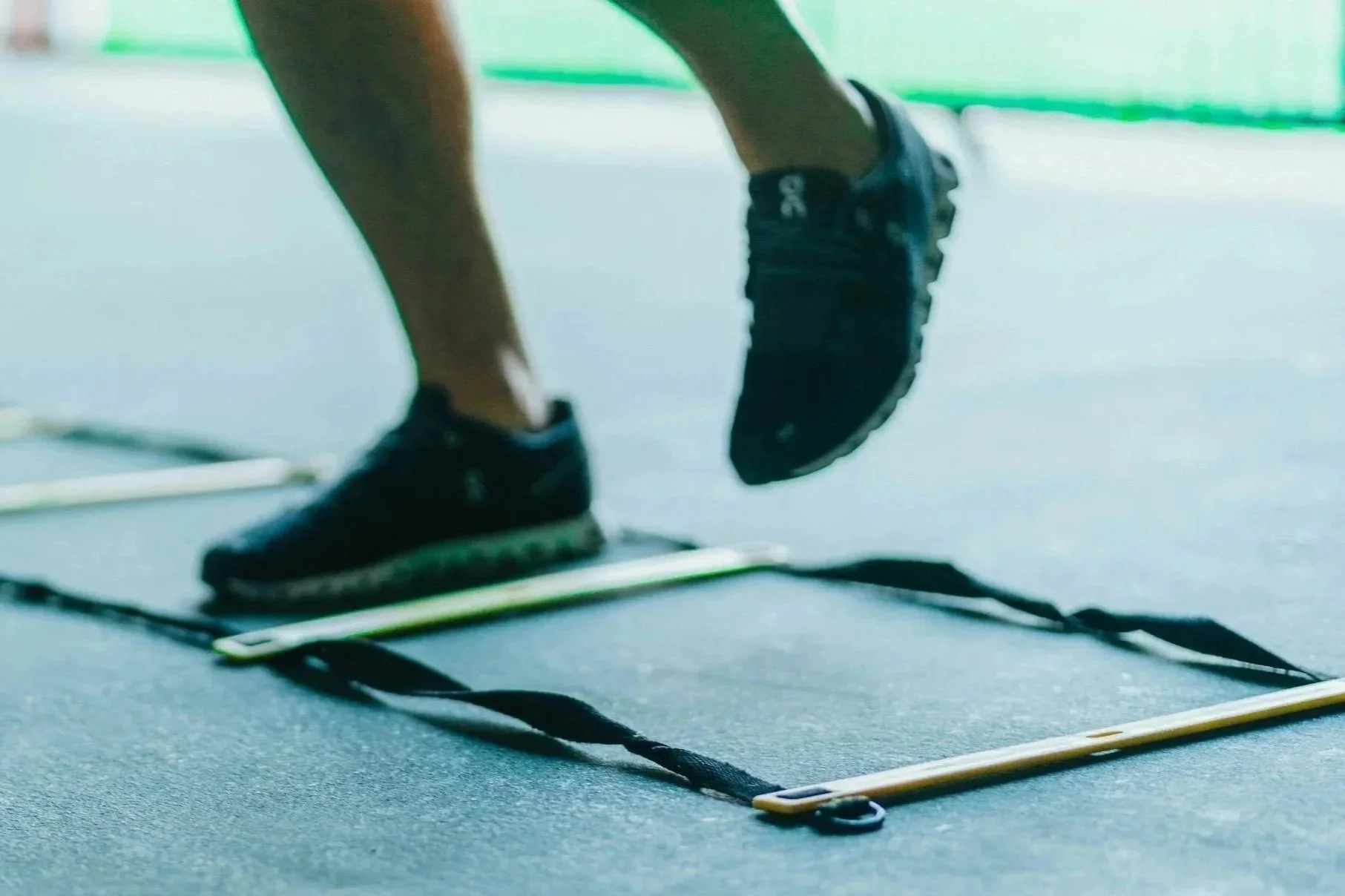
This is often why athletes turn to drills such as speed ladders in an attempt to improve sprint performance.
While ladders can help with rhythm, coordination and foot placement, they do not necessarily improve sprint speed.
Why?
Because sprinting is not simply about fast feet – it is about force application.
Ladder drills typically involve:
Short, rapid contacts
Minimal force production
Small movement ranges
Low horizontal projection
This means athletes often become better at moving quickly within the ladder rather than producing the large, powerful forces needed to sprint faster.
In some cases, constantly chasing quick feet can reinforce:
Reduced force output
Shortened movements
Poor sprint positions
Less effective mechanics
Maintaining full, efficient ranges of motion and learning to apply force effectively into the ground often allows athletes to sprint faster.
The goal is not simply faster leg turnover.
The goal is better force production and more effective sprint mechanics.
5. Speed Needs Consistency
Speed is not something you train once and keep forever.
Like strength or fitness, it responds to regular exposure.
Without consistent sprint work, speed can detrain quickly.
This is why speed should not be viewed as:
something to work on only in pre-season.
The most successful players usually include speed exposure consistently throughout the year.
6. You're Missing Structure
Sometimes athletes are motivated and working hard – but lack direction.
They may:
Do random drills
Copy social media workouts
Change sessions every week
Guess what they need
The problem?
Random training often leads to random results.
Structured progressions, clear goals and appropriate progressions tend to produce better long-term improvements.
Final Thoughts
If you feel stuck or frustrated with your speed development, you're not alone.
In many cases, the issue is not effort – it's structure, quality and understanding how speed is actually developed.
Speed is trainable.
But like any physical quality, it needs the right approach.
At Speed Solutions®, we help athletes understand why they move the way they do and provide the tools, coaching and structure needed to keep improving.
Stop guessing. Start progressing.
You're not just trying harder – you're learning to sprint better.
